
Nutrition for High School and College Athletes
Estimated reading time: 7 minutes
Nutrition for high school and college athletes is essential. How an athlete nourishes themselves is equally important to the training they do. College and high school athletes are unique — they juggle busy schedules filled with academics, early classes, double practices, social pressures, growth, and high-performance demands.
Nutrition should support performance, not be another factor that adds stress to an athlete’s plate. Fueling well does not have to be complicated. Read along for a simple, practical guide on how to best fuel an athlete for performance, recovery, and long-term health.
The Athlete’s Plate: A Simple guide to balanced meals
Don’t overthink your meals. Keep it simple and aim for balance. Here is a general guide for what to include at every meal:
- Carbohydrates such as bread, pasta, quinoa, rice, and potatoes provide energy that can be used right away or stored in our muscles and liver for later use.
- Proteins such as eggs, tofu, chicken, beef, pork, and fish are needed for recovery and growth.
- Healthy fats such as nuts, avocado, nut butters, seeds, dairy, and olives for satiety, vitamin absorption, and hormone creation.
- Fruits and vegetables for immunity, antioxidants, vitamins, and minerals.
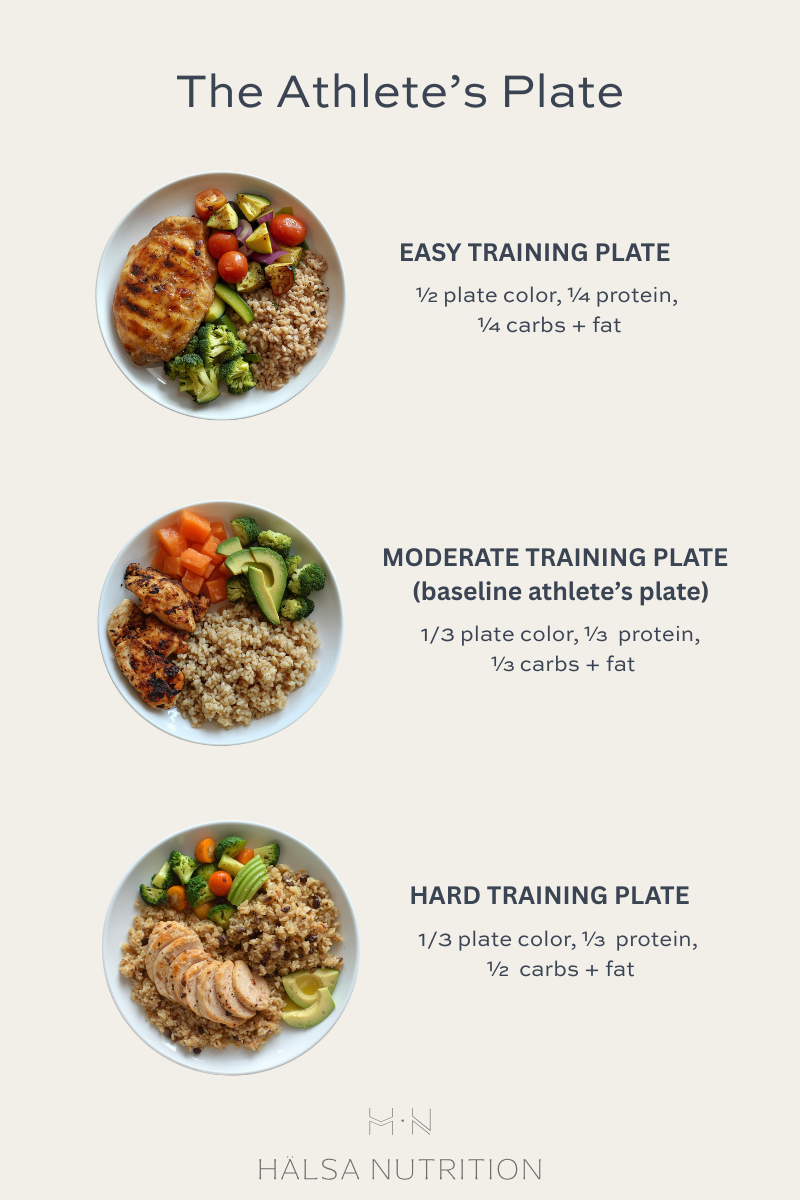
The athlete’s plate can help guide you to balanced eating. Rather than focusing on serving size or grams of protein, use this as a guide. Of course, it’s also important to eat intuitively, aim for satisfaction, and trust your body to tell you how much to eat. Learning about hunger and fullness can help.
- Easy training days (or off-season):
- 1/2 plate fruits and veggies (“color”), 1/4 plate grains/starches, 1/4 plate protein + source of fat
- Moderate training days (baseline, most days for high school and college athletes):
- 1/3 plate color, 1/3 plate grains/starches, 1/3 plate protein + source of fat
- Hard training days (also competition/game days or if trying to gain weight):
- 1/2 plate grains and starches, 1/4 plate protein, 1/4 plate color + source of fat
Hydration Tips
Make water your drink of choice. Milk (low-fat dairy or soy) can also be helpful, especially when you are looking to add extra protein or need a good source of calcium and vitamin D. Electrolyte drinks can be beneficial if you are working out longer than 60 minutes. For optimal fueling, keep drinks with added sugar or caffeine to a minimum and avoid alcohol.
What Balanced Meals Can Look Like
Breakfast ideas:
- Veggie omelet + whole grain toast + fruit
- Greek yogurt parfait
- Peanut butter banana toast with cinnamon and honey + glass of milk
- Breakfast burrito
- Egg, cheese, and avocado sandwich on whole wheat bread
Lunch/Dinner ideas:
- Turkey and veggie sandwich + fruit
- Tuna sandwich on whole wheat + carrot sticks
- Grilled chicken, veggie, and quinoa bowl
- Chicken sandwich + side salad
- Salmon, veggie, and brown rice bowl
- Pasta with a protein and a vegetable
What About Dessert and Fun Foods?
All foods can fit into an athlete’s balanced diet. Foods like cookies, ice cream, chips, and French fries may not fit neatly into the athlete’s plate, but that doesn’t mean they aren’t important. While they don’t make up the base of your fueling needs, they provide pleasure and satisfaction–an important part of nutrition! Additionally, they all provide energy (calories), which is what you need to thrive as an athlete!
Snacks are Essential for Athletes
Don’t forget snacks! Meals are important, but snacking throughout the day will help you feel and perform your best. Most athletes benefit from 3 meals a day plus 3-4 snacks, depending on training load, schedule, and goals. After exercise, many athletes experience a temporary decrease in appetite. While intuitive eating is valuable, training can sometimes mask hunger. In these cases, it is important to eat intentionally to support recovery. To make sure you are eating enough, aim to eat at least 45 grams of carbohydrates and 15-30 grams of protein after exercising.
Create a Fueling Schedule
A general fueling schedule could look like:
- Breakfast
- Snack
- Lunch
- Pre-workout snack
- Training
- Post-workout snack
- Dinner
- Snack
For a high school student, this might look like:
- 6:30 AM – breakfast at home
- 9:30 AM – snack*
- 12 PM – lunch at school
- 2:45 PM – pre-workout snack
- 5 PM – post-workout snack
- 6:30 PM – dinner
- 9:30 PM – bedtime snack
*Can’t eat in class? Try having a bar between classes or pack a drinkable yogurt!
Timing Tips for Optimal Fueling
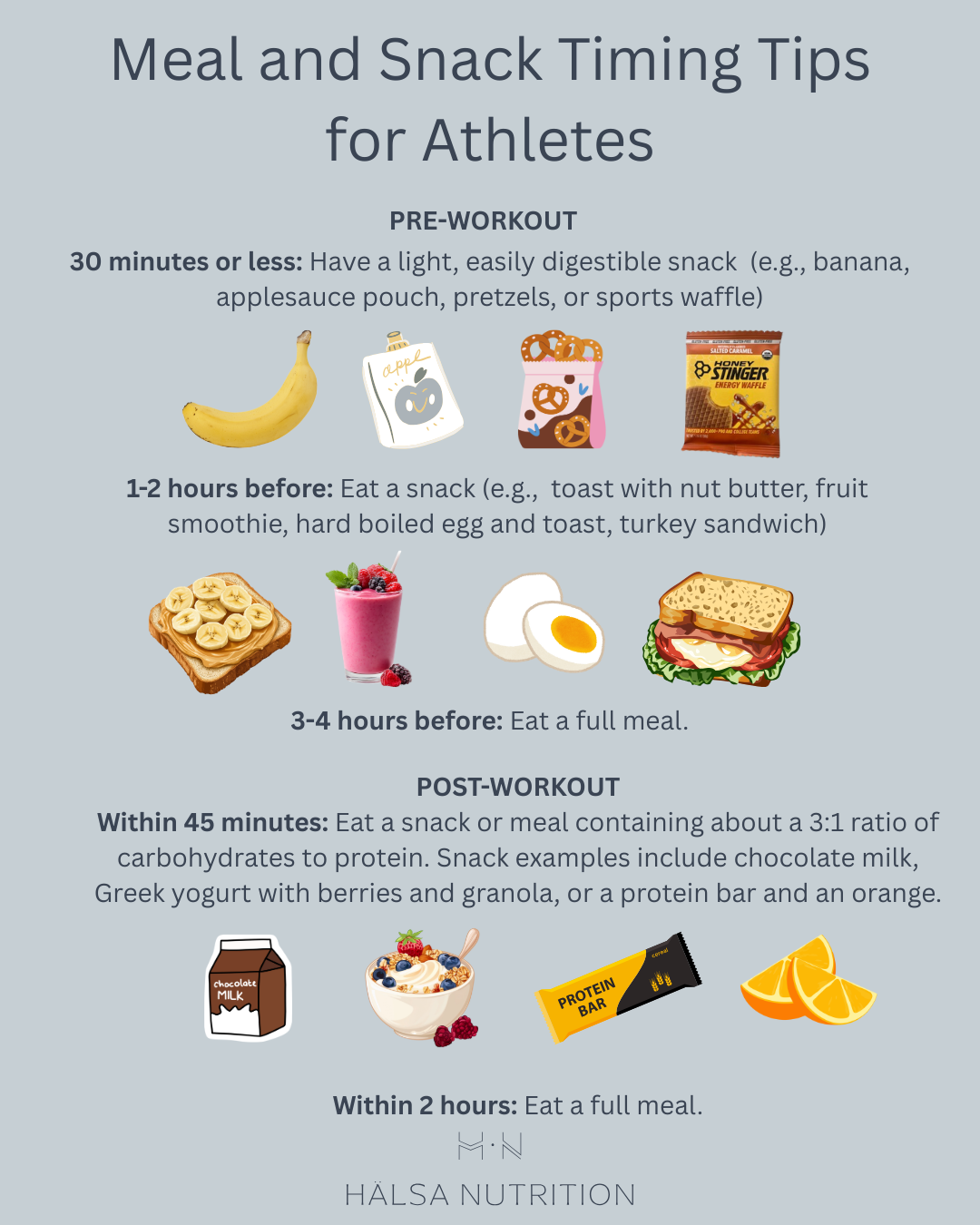
Pre-workout:
- Eat a snack 1–2 hours before training or competition.
- Allow 3–4 hours to digest a full meal, such as breakfast or lunch.
- If you have 30 minutes or less, choose a light, easily digestible snack that won’t cause discomfort.
- Athletes in high-intensity sports may want to avoid eating right before activity.
Post-workout:
- Ideally, try to eat a snack or a meal within 45 minutes of completing your exercise. If you eat a small snack, be sure to also eat a full meal within 2 hours.
- Aim for a balanced, satisfying snack or meal that includes a variety of food groups. Experts recommend a 3:1 ratio of carbs to protein. But know that eating anything is much better than eating nothing. Your body needs to refuel after a workout!
- Think of the 3 r’s: refuel, replenish, and repair.
- Carbohydrates refuel your muscles with energy and help prevent muscle breakdown.
- Protein helps repair and rebuild muscle, promoting optimal training outcomes.
- Fluid replenishes lost water. Note that some foods contain a lot of water and contribute to the needs.
- Electrolytes, such as sodium and potassium, replenish nutrients lost through sweat.
- Fruits and vegetables should be included whenever possible because they provide important nutrients, including minerals (such as potassium and calcium), vitamins (such as vitamin C), and carbohydrates.
Fuel to Reduce The Risk of RED-S:
RED-S (Relative Energy Deficiency in Sport) is a syndrome characterized by athletes not consuming enough calories to support their training and general well-being. It is more common than many realize, especially in athletes with busy schedules, high stress levels, or high training volumes. It’s also often associated with disordered eating.
Subtle warning signs may include:
- fatigue
- decreased muscle strength
- decreased endurance
- lowered metabolism
- trouble staying warm
- low heart rate that may lead to dizziness
- frequent colds or infections
- mood changes
- poor recovery
- menstrual irregularities in females
- frequent injuries
The body reduces functions such as reproduction, immune function, metabolism, and bone health to conserve energy. Underfueling can affect long-term health, so it is important to fuel well and seek guidance from a dietitian if there are any concerns.
Finals Thoughts
The importance of fueling extends to the field and court, as well as to your long-term health. Nutrition can often fall down the priority list when we are juggling a lot. If helpful, sit down at the beginning of each week and roughly plan out your meals and snacks. Most importantly, listen to your body – you know it best!
Practical Tips/Takeaways
- Use the athlete plate as a daily guide
- Eat consistently: meals + snacks
- Don’t skip fuel even if not hungry
- Check in with yourself to monitor your mood, energy + recover
Remember that everyone is unique. Your ideal eating pattern is one that helps you thrive and feel your best — both in general and in your sport. This will vary from one individual to another depending on individual needs, schedules, food availability, and preferences.
For more individualized advice and guidance, meet with a Registered Dietitian Nutritionist. Many dietitians take insurance, so your visit may be fully covered!
Other Posts You Might Like:
- How Much Protein Do Teens Need?
- Intuitive Eating for Teens
- Nourished Eating for Teens – A Visual Approach
- Disordered Eating: More Common than You Realize
Sports Nutrition Resources:
About the author:
Sofia Vatnik is a senior, nutrition major at Syracuse University on the path to becoming a registered dietitian. Her interests and passions lie in helping people find joy in food while steering away from diet culture.
This article was edited and reviewed by Maria Adams, MS, MPH, RDN, LDN, a registered dietitian and Certified Intuitive Eating Counselor. Maria takes a weight-inclusive approach, helping individuals rediscover the joy of food, eat to feel their best, and heal from chronic dieting and disordered eating. She holds a Bachelor of Science Degree in Nutrition Science, a Master of Science in Nutrition Communication, and a Master of Public Health.


Leave a Reply